Baffles & Barriers
Squirrel Baffle Guide: Types, Placement, and Pole Setup
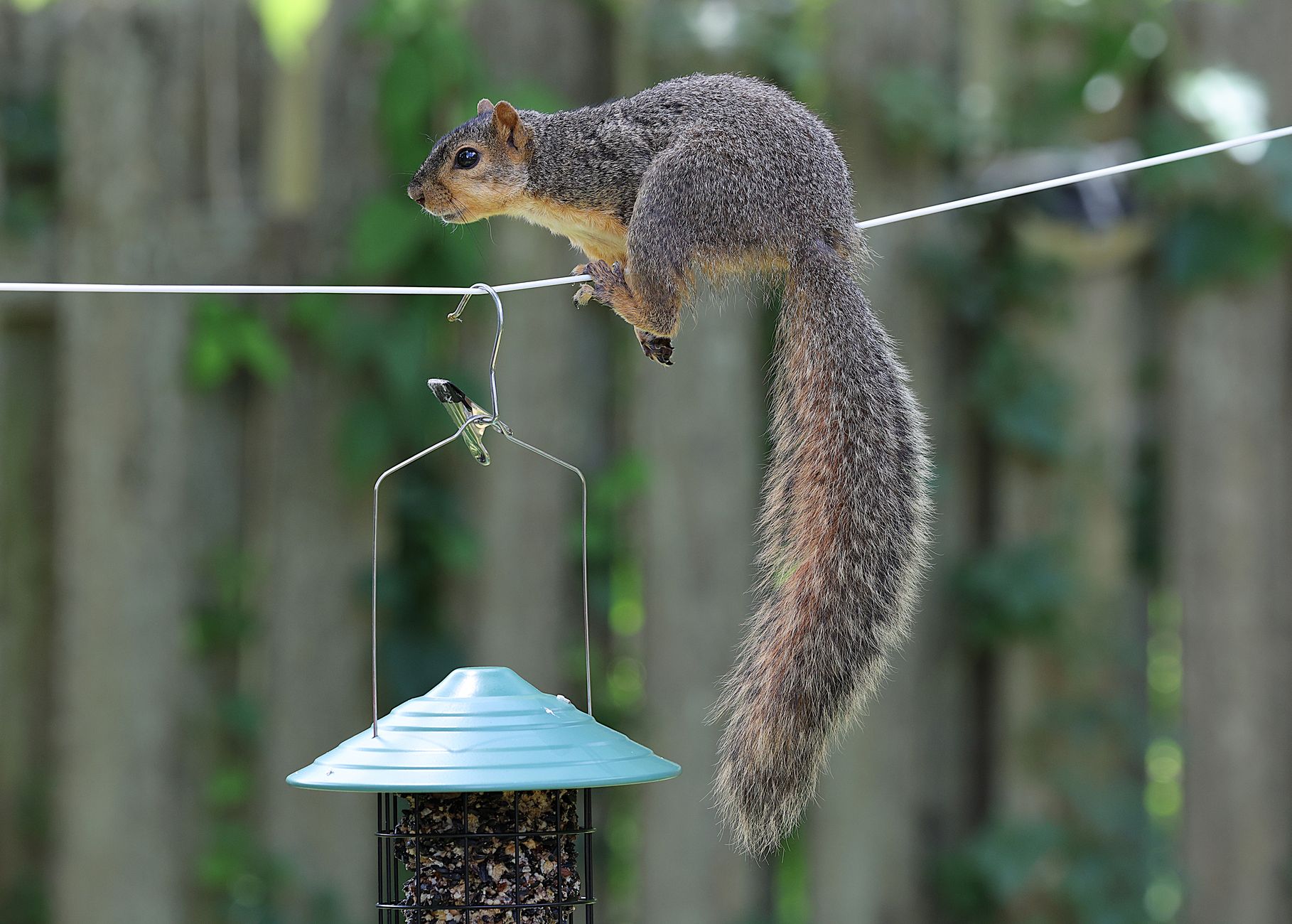
A squirrel baffle is a barrier intended to interrupt a squirrel’s route to a bird feeder. It can be one part of a squirrel-resistant feeder setup, but the pole, feeder position, and nearby launch points matter just as much.
Use this guide to identify the access route first, then select and place a baffle that is compatible with the pole and feeder arrangement.
What a squirrel baffle is designed to do
Purpose-built baffles are intended to make one route—usually climbing a pole or reaching a feeder from above—more difficult. They do not automatically address every route around a feeder system. A squirrel may still reach the feeder by jumping from a branch, fence, deck rail, roof edge, or other nearby object.
Before changing the setup, watch how the animal approaches. Is it climbing from the ground, jumping from the side, dropping from above, or using another part of the feeder assembly? That observation should guide the next step.
Common baffle arrangements
“Squirrel baffle” describes several arrangements rather than one universal shape. Check the product instructions for the intended mounting position, orientation, compatible pole size, and clearance requirements.
Cone-style pole baffles
A cone-style baffle has a broad, flared profile and is often used on a vertical pole below a hanging feeder or feeder support. The wide edge is intended to interfere with a squirrel climbing upward on the pole.
A cone-style option may suit a freestanding vertical pole when the feeder hangs above the baffle and the baffle can be installed without interference from pole joints, braces, or decorative hardware. It needs open space around it; a nearby railing, trunk, or support can provide another route.
Tube or cylindrical pole baffles
A tube baffle is a cylindrical barrier fitted around part of a pole, commonly in the lower section. Its use is generally focused on ground-up climbing access rather than side jumps or drop-down access.
Consider this arrangement only when the pole has a clear compatible section and the manufacturer permits its use with that pole material, diameter, and mounting configuration. Do not assume a tube baffle alone protects feeder arms or a feeder placed close to another structure.
Feeder-mounted baffles and covers
Some baffles mount near or above the feeder rather than on the pole. Their purpose and placement vary by model, so follow the supplied instructions instead of treating a pole-baffle layout as universal.
Weather domes and feeder-top covers can look similar to a baffle, but they may be intended mainly to shield seed from weather. Do not rely on a weather cover as a squirrel barrier unless its manufacturer identifies it for that purpose and for your feeder arrangement.
Match the baffle to the pole system
Check pole diameter and shape
Collars, clamps, brackets, and internal fittings are made for particular pole sizes or shapes. Measure the outside diameter and note whether the pole is round, square, tapered, or textured. A poor fit can make installation difficult or allow the baffle to shift.
Check the available mounting area
Look for pole joints, hooks, stabilizers, ground sleeves, crossarms, and feeder supports that could block the intended location. A cone-style baffle needs room below the feeder area, while a tube-style baffle needs a clear section of pole in the location specified for that model.
Inspect the whole multi-feeder pole
On a multi-feeder system, crossarms, hanging chains, trays, lower feeders, and adjacent poles can create additional access paths. Evaluate the entire assembly rather than only the highest feeder.
Placement: match the route to the fix
Use the manufacturer’s mounting directions for exact dimensions and position. Then apply this route-to-fix check to the surrounding setup.
- Ground climbing: Inspect the lower pole and choose a compatible pole-mounted barrier. Also check for braces, cords, or nearby objects that create a second route upward.
- Side jumping: Move the pole or remove the practical launch point, such as nearby furniture, a fence, railing, wall, or stored item.
- Drop-down access: Inspect overhead branches, roof edges, and hanging structures. Prune or relocate only where appropriate and safe.
- Access through the feeder assembly: Check arms, chains, trays, supports, and feeder spacing. A pole barrier may not address a route that begins above the barrier.
- Unclear route: Look for changes in the yard layout, leaning equipment, or vegetation that has grown closer to the feeder.
Keep the pole stable and leave open space around the baffle. A loose, leaning, or obstructed setup can prevent the equipment from sitting as intended.
Installation checks
- Inspect the pole for bends, corrosion, damage, or loose sections before adding hardware.
- Confirm the baffle is intended for the pole’s material, diameter, shape, and feeder arrangement.
- Install it in the orientation and location specified by its manufacturer.
- Tighten hardware as directed, without deforming a thin pole or over-tightening fasteners.
- Recheck that the pole remains upright, secure, and clear of the baffle after installation.
- Observe the system after setup and after yard changes, looking for a new path to the feeder.
If installation involves drilling, structural modification, or work near overhead lines, stop and confirm that the method is appropriate for the equipment and location.
Why squirrels may still reach the feeder
A nearby object provides a jump
A baffle on the pole does not eliminate a side route to the feeder or feeder arm. Check branches, fences, railings, walls, tables, hanging decorations, and flexible vegetation that may reach closer under weight.
The baffle has moved or is blocked
Inspect the collar, clamps, pole alignment, and the space around the baffle. Debris or another component touching the baffle can interfere with its intended position or movement.
Another climbing path is available
Check attached cords, braces, chains, decorative pieces, and nearby supports. Address the complete route rather than adding another barrier without identifying the entry point.
The yard layout has changed
New furniture, stored supplies, vegetation growth, pruning, or a relocated feeder can change access conditions. Reassess the feeder area whenever the surroundings change.
Maintenance checks
Periodically remove debris that interferes with mounting hardware or moving parts. Check fasteners, pole stability, and metal components for corrosion or sharp edges. If a baffle cracks, warps, or no longer stays in position, follow the manufacturer’s repair or replacement guidance before depending on it.
Choosing an approach
Choose a baffle based on the route you need to interrupt, not on shape alone. A cone-style or tube-style pole baffle may be appropriate for ground-up pole access when it fits the system and has adequate clearance. A feeder-mounted barrier may use a different layout. In every case, confirm compatibility, maintain a stable pole, and remove practical jumping or drop-down routes where possible.
Think of the pole, baffle, feeder arms, and surrounding yard features as one system. When squirrels still reach the feeder, trace the route first; that is more useful than assuming the baffle itself is the only problem.
For more information about this site’s scope and approach to feeder-pole guidance, see Squirrel Proof Bird Feeder Pole.
[…] For a closer look at comparing mounting methods and styles, see this squirrel baffle guide. […]
[…] route. The pole location, feeder position, and a compatible baffle may all be relevant. See the squirrel baffle guide for placement and access-route […]